“It Was Not War, It Was Murder” – The Battle of Cold Harbor
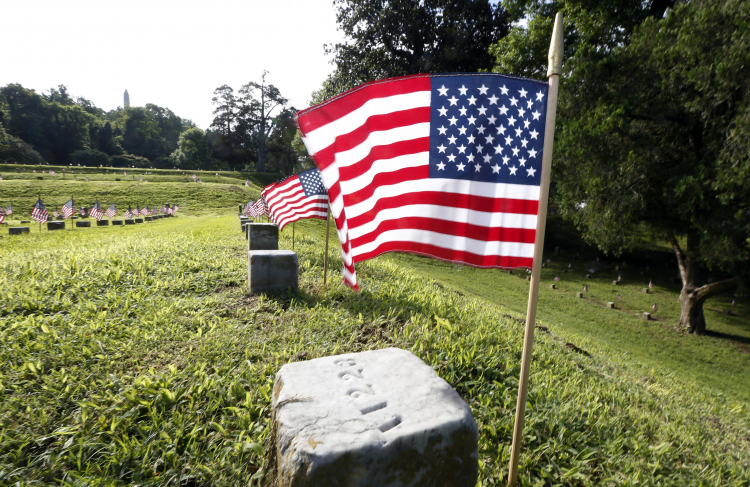
Writing more than 20 years after the Battle of Cold Harbor, Gen. Ulysses S. Grant stated, “I have always regretted that the last assault at Cold Harbor was ever made.” Grant’s regret was an understatement of what occurred on June 3, 1864, at that Virginia crossroads named after a British inn that once offered overnight lodging to travelers. Cold Harbor offered a preview of what would occur on a much larger scale fifty years later on the Western Front in the First World War. Confederate Gen. Evander Law later wrote of the fighting at Cold Harbor on June 3, “It was not war, it was murder.”
Cold Harbor was the last battle in Grant’s Overland Campaign, perhaps the bloodiest 40 days of the American Civil War. Prior to Cold Harbor, Grant’s Army of the Potomac and Gen. Robert E. Lee’s Army of Northern Virginia had slugged it out at the Wilderness, Spotsylvania Courthouse, and the North Anna River, where the casualties on both sides mounted ever higher – upwards of 20,000 for Lee’s army and more than 40,000 for the Union in the month of May. Cold Harbor would add considerably to those numbers.
Grant was determined not to give Lee’s army respite as he forced them closer to Richmond in his race to the James River. After crossing the North Anna River, Grant ordered his generals to seize the crossroads at Cold Harbor – an intersection where five roadways met. But Lee’s army was always Grant’s objective. Lee, recognizing the disparity of forces and resources between the Union and Confederate armies, told one of his generals, “We must destroy this army of Grant’s before he gets to the James River. If he gets there it will become a siege, and then it will be a mere question of time.”
Between May 28 and May 30, 1864, the two armies gradually faced each other between Topotomoy Creek and the Chickahominy River along a six-mile front. The ground was not unfamiliar to the armies – they fought near there two years earlier during the Battle of Gaines Mill, part of the Seven Days’ Battles – but Lee knew the ground better than Grant, who until then had spent much of the war in the “western” theater. Grant had about 110,000 men; Lee had nearly 60,000. Grant was confident, writing to Washington that success over Lee’s army was “assured.” It was an uncharacteristically staggering misjudgment for Grant, the consequences of which were catastrophic.
Grant launched attacks on Confederate positions on June 1 and 2, gaining ground. But Lee had chosen his position well, and his army had made good use of the pick, shovel, and bayonet. Historian Ernest Ferguson describes the Confederate defenses:
"They had created not one main line of resistance, but two and in places three, following the uneven terrain, snaking in and out of gullies and clumps of wood from the ridges near the Totopotomoy to the swamps along the Chickahominy... they laid head logs atop their earthworks, with firing holes and crevices in between, and cut thickets of saplings to make defensive abatis."
Without reconnoitering the field, Grant ordered an all-out assault on the rebel lines on June 3. Some Union soldiers who saw the Confederate entrenchments and understood what this meant wrote their names on pieces of paper and pinned the paper to their uniforms so their families could be informed about their deaths. The Union attack began at 4:30 a.m. As the Federal soldiers advanced, historian Shelby Foote wrote:
"They saw black slouch hats sprout abruptly from the empty-looking trenches up ahead, and then the works broke into flame... and the air was suddenly full of screaming lead… Never before, in this or perhaps in any other war had so large a body of troops been exposed to such a concentration of firepower."
Survivor accounts differed about how long the attack lasted, and historians have debated the precise number of Union casualties resulting from the June 3 attack. Gordon Rhea estimates that the attack lasted an hour and produced about 3,500 Union casualties. Others claim the attack took between eight minutes or half an hour and put the Union casualty figure at 7,500 or even 12,000. Whatever the actual time-period and casualty numbers, it was a slaughter of Union troops. The ground in front of the Confederate trenches was covered with Union dead and wounded. Grant called off the offensive and wired Washington that Union losses were “not heavy.” Later that month, President Lincoln speaking in Philadelphia remarked that “War, at best, is terrible, and this war of ours, in its magnitude and duration, is one of the most terrible [which] has carried mourning to almost every home, until it can almost be said that the ‘heavens are hung in black.’”
The confederate trenches, like those that were dug fifty years later on the Western Front, still scar the land at Cold Harbor. The futile assault gained the Union nothing, but Lee did not destroy Grant’s army, which reached the James River on June 14. Soon thereafter, Grant laid siege to Petersburg, endangering Richmond, and from then on, as Lee predicted, it was just a matter of time.