Before the founding of Israel, the Galilee, stretching from the Litani River in the North to the Jezreel Valley in the South, was a quiet region split between Mandatory Palestine and Lebanon. Largely populated by a mix of Jews, Shias, and Sunnis, the region was far away from administrative centers and life was shaped by kinship and survival.
Today, the Galilee is split between a Jewish Israel and Shia South Lebanon, and has been subject to sporadic conflicts between the State of Israel and Shia Islamist Hezbollah since the 1980s. Spurred by the Khomeinist ideology of the Iranian regime, the terrorist organization Hezbollah has gained popular support from the Shia of South Lebanon in their fight against Israel. But despite their modern posture, the region’s Shia Muslims have only recently been recruited as fervent opponents of the State of Israel. Before the establishment of the State of Israel, the Shia population of the quiet Galilean borderlands prioritized their own survival and historically pleasant relations with nearby Jewish settlements over a disconnected Sunni-led jihad for Palestine.
The Shia of the Galilee, also known as ‘Metawali,’ meaning ‘the one who shows loyalty,’ were, and remain, the majority in South Lebanon. Across the border, Palestinian Arabs were universally Sunni Muslim, but seven Metawali Shia villages existed in the Palestinian Galilee due to a border realignment that moved the border further north.
The seven villages’ relationship with other Palestinian communities was indicative of Arab Palestinian society’s utter fragmentation in the early 20th century. Some make the mistake of describing the period’s Palestinian Arabs as a single organ. In reality, they were heavily divided on familial, tribal, and political lines, which exacerbated Sunni-Shia sectarian polarization. Expectedly, the seven villages were far closer in culture and religion to their fellow Metawali Shias of the Galilee than to neighboring Sunni communities. Starting in the early 20th century, tensions between the Palestinian Arab and Jewish communities became violent. In the eyes of the Metawali, the Sunni Palestinian radicals rendered a far greater threat to their survival than the Jews, whose nearby villages had friendly relations with the Metawali. They shared the historical trauma of persecution by the Sunni Ottomans.
In the 1930s and ‘40s, the region was inexorably moving towards a larger conflict between Palestinian Jews and Arabs. In contrast to the disorganized Arabs, the Jews were largely organized around the Yishuv. Militias on both sides sprang up, like the Zionist Lehi and Irgun, both of which utilized bombing and other acts of terror against Palestinian Arabs. But some Metawali Shia and Lebanese Maronites voiced their support for these reprisal bombing attacks. While this support was not overwhelming or notable at the time, it characterized how detached the Shia of Lebanon were from the wider Arab world, which was fulminating at the idea of Jewish Statehood. For these minority groups, their sympathy and support for terrorist action illustrates an ethical dilemma that they justify due to common solidarity with the Jews against a seemingly radical Sunni force. From the Sunni perspective, the ensuing war was seen as a religious calling by much of the Sunni world, and many scholars, like those from Al-Azhar, ended up declaring jihad against the Jews of Palestine by 1948. To the Metawali Shia, this jihad threatened them as well, giving rise to pragmatic support for the Zionist cause.
In 1947, a full-scale civil war between the Zionists and Arabs enveloped Palestine. The Zionists were led by the Yishuv and its military wing, the Haganah. The Arabs were led by the Arab Liberation Army (ALA), utilizing volunteers from across the Arab world. The ALA stationed itself all over Palestine in Arab villages, mostly with the express support of its inhabitants. The seven Shia villages, which had friendly relations with their fellow minorities, did not take part in this conflict.
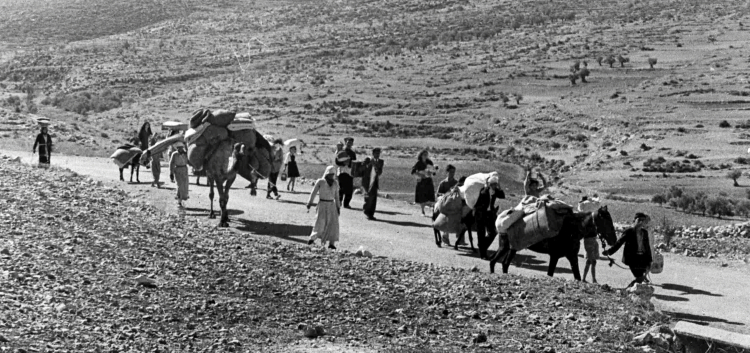
By 1948, the war had expanded with the entrance of neighboring Arab states on the side of ALA to defeat the newly declared State of Israel. The new state, with David Ben-Gurion at its helm, was successful in defending its territory against the invading Arab States. Ben-Gurion tasked the Israel Defense Forces (IDF), the successor to Haganah, with capturing the Upper Galilee region on the border with Lebanon. The advance, dubbed Operation Hiram, was a major success, but it also precipitated Arab residents, including the seven Shia villages, to flee. The fear of being identified as Sunni Arab by the Haganah, and then massacred, engulfed the seven villages, who opted to flee. The operation itself routed the ALA north up the Galilee Panhandle and then west, into Lebanon. The IDF proceeded to cross the border and pursue the ALA into Lebanon.
Lebanon chose to stay neutral, deploying its army “defensively” along the border while giving the ALA permission to use South Lebanon as a launchpad. The reason the Lebanese government opted out of the pan-Arab invasion was two-fold. First, the Maronites, Druze, and Shia were all wary of going to war. Many within these groups were not only disillusioned by the largely Sunni Muslim Jihad declared by the rest of the region, but even sympathetic to the Zionist cause as a minority bulwark against Sunni Arab oppression. Second, the country faced practical limitations with its small army and limited arms.
The IDF crossed the Lebanese border and captured some fifteen villages, all of which were majority Metawali Shia. Many of these villages signed instruments of surrender, and some asked to be annexed into the new State of Israel. These villages, many of which were friendly with nearby Jewish settlements and pragmatically supported the Zionists, were tired of hosting the Sunni-dominated ALA, which harassed villagers. The IDF remained in Lebanon until an armistice was signed in 1949. However, the Israelis did not end up annexing any part of Lebanon. During the occupation, rogue IDF officers tainted Israel’s image among the Lebanese by committing a massacre at the Lebanese village of Hula. This massacre shattered Zionist sympathies and trust from the Metawali Shia.
As discussed, the Shia borderlands and their heterodox views on the initial Jihad against the nascent Jewish State were shaped by regional interests and relationships. As a fellow minority in the Levant, the Shia felt closer to other minority groups like the Jews and Druze than to the majority Sunni Muslim population of the region. The calculus was that a bordering Jewish State, or even being incorporated by it, would be a safeguard against persecution by Beirut or Sunni Palestinian militias.
From this point onward, the Arab and Islamic struggle against the State of Israel would largely remain a Sunni cause until 1979 when Ruhollah Khomeini, the religious cleric who took over Iran, would attempt to fold the Shia world into his brand of Third-Worldist Islamism. In Lebanon, this strategy didn’t prove effective until the mid-80s with the rise of Hezbollah.
The behavior of the Galilean Shia is indicative of a simple rule: political support in exchange for survival, a case study in political ethics under duress. In 1948, when the wider Islamic world chose violence, the Galilean Shias sat squarely outside the Jihad. Shia villages wished to be annexed, with some actively supporting attacks on Palestinians. As minorities who were navigating a Sunni-majority region, Shia-Jewish solidarity had the real possibility of cementing itself for decades. This remained the case until the rogue massacre at Hula shattered Jewish-Shia solidarity.
Nowadays, the Shia of Lebanon are fervent supporters of Palestinians. Hezbollah remains one of Israel’s primary foes, and the group has launched two wars and countless skirmishes against Israel. The Shia-Jewish interactions of the Galilee teach us how communities switch political loyalty for survival and how this dynamic ultimately created a hostile environment on the Jewish State’s northern border. But more importantly, these interactions give us insight into a world where Shia-Jewish friendship and alliance is possible, and that modern political hostility is not eternal.
Read Full Article »