The Panama Canal stands as one of the most monumental engineering achievements in modern human history. Stretching approximately 50 miles across the narrow Isthmus of Panama, this artificial waterway connects the Atlantic and Pacific Oceans, fundamentally altering the trajectory of global trade and maritime navigation. Before its completion, vessels traveling between the eastern and western coasts of the Americas were forced to navigate the treacherous waters of Cape Horn or the Strait of Magellan at the southernmost tip of South America. The canal eliminated nearly 8,000 nautical miles from this journey, saving unparalleled amounts of time, fuel and capital. From initial, disastrous French attempts to U.S. geopolitical maneuvering, the construction of the Panama Canal is defined by human ambition, engineering breakthroughs, and complex international diplomacy.
The French Endeavor: Ambition and Catastrophe
The desire to bisect the American continents with a maritime shortcut dates back to the 16th century, when Holy Roman Emperor Charles V ordered a survey of the Isthmus of Panama in 1534. However, serious construction did not begin until the late 19th century. Encouraged by his triumphant completion of the Suez Canal in 1869, French diplomat Ferdinand de Lesseps spearheaded an initiative to build a sea-level canal across Panama. In 1881, de Lesseps’s company, the Compagnie Universelle du Canal Interocéanique, broke ground on the project, backed heavily by private investors.
French engineers vastly underestimated the geographical and biological hostility of the Panamanian jungle. Unlike the flat, sandy expanses of Egypt, Panama presented an unrelenting combination of dense rainforests, torrential rains, deep mud, and unstable mountainous terrain. The insistence on a sea-level canal – without locks to adjust for varied elevations – doomed excavation efforts. Workers faced constant landslides, particularly in the deep Culebra Cut, alongside unmanageable flooding from the Chagres River. Even more devastating were tropical diseases, specifically yellow fever and malaria, which decimated the workforce before medical science understood mosquitoes as the primary carriers. By the time the French effort officially went bankrupt in 1889, the company had expended roughly $287 million, and an estimated 22,000 workers had perished.
The Geopolitics of the Isthmus: U.S. Intervention
At the dawn of the 20th century, President Theodore Roosevelt recognized the strategic and economic necessity of an interoceanic canal. A two-ocean navy required swift movement between oceans, while American commercial interests demanded faster shipping routes. In 1902, the U.S. Congress passed the Spooner Act, authorizing the purchase of the French company's remaining assets and pursuing a canal route through Panama, which was then a restive province of Colombia.
The United States negotiated the Hay-Herrán Treaty with Colombian diplomats in early 1903 to lease a canal zone, but the Colombian Senate rejected the treaty over financial terms and sovereignty concerns. Frustrated by this roadblock, President Roosevelt shifted tactics, subtly signaling support for a brewing Panamanian independence movement.
On November 3, 1903, Panamanian rebels declared independence from Colombia while U.S. warships positioned off the coast effectively prevented Colombian troops from suppressing the uprising. Three days later, the United States formally recognized Panama. On November 18, 1903, the newly formed nation signed the Hay-Bunau-Varilla Treaty, granting the United States exclusive, permanent control over a 10-mile-wide Panama Canal Zone in exchange for an initial payment of $10 million and an annual $250,000 annuity. This secured the necessary territory, though it left a legacy of resentment regarding American "gunboat diplomacy."
Engineering the Impossible: The American Era
In 1904, the United States formally assumed control of the project, succeeding where the French failed by adapting engineering and medical strategies to the environment. Dr. William C. Gorgas implemented aggressive public health campaigns, building upon discoveries regarding mosquito-borne illnesses. Swamps were drained, standing water was oiled to kill larvae, streets were paved, and quarters were fumigated. These measures eradicated yellow fever in the zone by 1906 and drastically reduced malaria, providing a healthy workforce.
On the engineering front, Chief Engineer John Frank Stevens recognized a sea-level canal was an impossibility and successfully lobbied for a lock-based system. The plan involved damming the Chagres River to create Gatun Lake, a massive inland reservoir. Ships would be lifted 85 feet above sea level via concrete locks, traverse the lake and the treacherous Culebra Cut, and then be lowered back to sea level on the opposing coast. Following Stevens's resignation in 1907, Major George Washington Goethals oversaw the final phase. Under his disciplined management, excavation through the continental divide accelerated. American crews moved over 238 million cubic yards of earth, using millions of pounds of dynamite to blast through dense rock.
Completion and the Dawn of a New Trade Era
The Panama Canal officially opened to maritime traffic on August 15, 1914, with the passage of the cargo ship SS Ancon. The American construction phase cost approximately $375 million and claimed roughly 5,600 lives, bringing the total death toll across both efforts to over 25,000.
The economic and geopolitical impacts were immediate and profound. The canal revolutionized global supply chains, allowing goods moving between the U.S. East Coast, Europe, and Pacific Rim markets to transit at a fraction of previous costs and travel times. By saving nearly 8,000 nautical miles between New York and San Francisco, the waterway accelerated global trade and cemented the United States as an unassailable global maritime power.
The Modern Era: Sovereignty and Expansion
U.S. sovereign control over the Canal Zone generated persistent friction with Panamanians who viewed it as a colonial enclave. Tensions culminated in the 1977 Torrijos-Carter Treaties, which outlined a gradual handover resulting in full Panamanian control on December 31, 1999. Since assuming management, the Panama Canal Authority has operated the waterway as an independent, highly profitable enterprise central to Panama's economy.
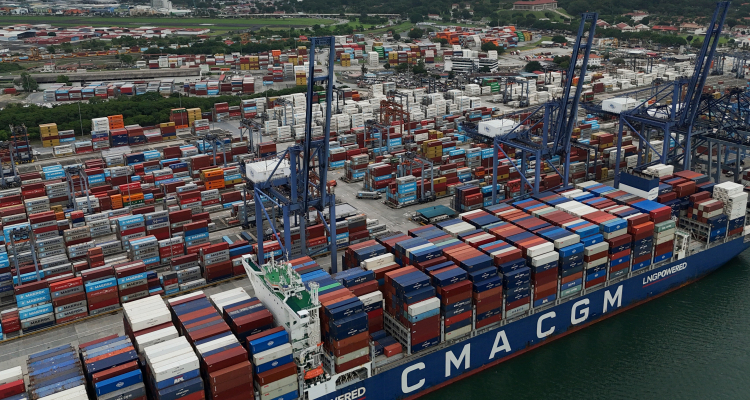
To accommodate modern mega-ships, Panama launched a $5.25 billion expansion project in 2007. Completed in June 2016, the project added a third set of larger locks and deepened channels, doubling cargo capacity and allowing "Neopanamax" vessels carrying up to 14,000 TEUs of cargo to transit the isthmus.
The Panama Canal remains a defining achievement of the modern era, symbolizing the zenith of industrial ambition. From early French failures to American engineering and medical triumphs, its creation represents a relentless human drive to conquer geography. Handling hundreds of millions of tons of cargo annually, it operates as an indispensable artery of the global economy and a testament to the enduring vision of those who split the continents and united the seas.
Read Full Article »