Cloisters and Courage: Westminster Abbey Under Fire
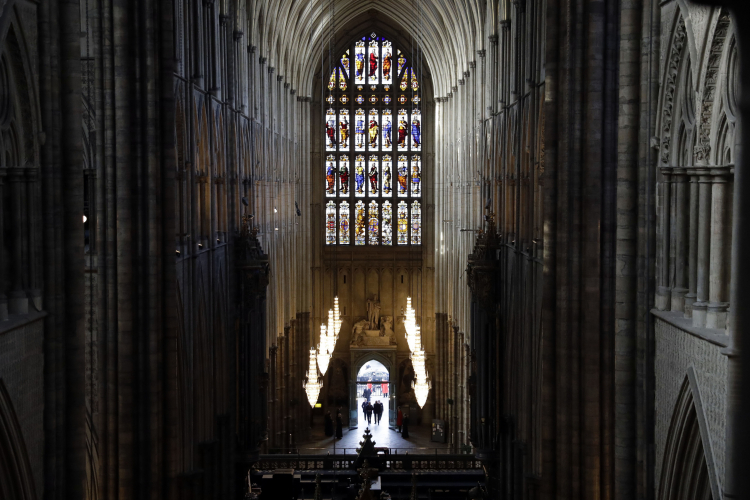
At Westminster Abbey, over 1,000 years of Christian observance and British royal ceremony are enshrined within a set of medieval walls. After a millennium, the Abbey exerts a powerful hold on British and world public imagination, as a spectacular venue for royal and national services and commemorations. The Abbey remains among the UK’s top visitor attractions: 1.7 million tourists to London encountered its treasures in 2024.
May 2026 marks a dramatic anniversary for this venerable institution. Eighty-five years ago – in May 1941 – Westminster Abbey faced a moment of severe crisis during the Blitz. To save it required the enormous courage, dedication and skill of its staff and London’s hard–pressed fire crews.
Royal Peculiar
Westminster Abbey has seen it all. Founded as a Benedictine monastery in 960 AD, construction of the Abbey began under the Anglo–Saxon King Edward the Confessor in around 1045. Dedicated in 1065 – just in time for the Norman Conquest of 1066 – the present Gothic buildings took shape from 1245 during the reign of Henry III. The Abbey is home to an astonishing 600 royal tombs and memorials, including those of Edward the Confessor, Henry V and Elizabeth I. World famous for Poets’ Corner and the Tomb of the Unknown Warrior (1920), the Abbey’s vaults also provide the final resting place for many national luminaries, including Geoffrey Chaucer, Charles Dickens and Charles Darwin.
Joy and sadness walk hand in hand in the Abbey. A so–called ‘Royal Peculiar’ – administered since the 16th century Protestant Reformation by the sovereign rather than by a diocese – Westminster Abbey has celebrated 16 royal weddings and 39 royal coronations before its High Altar, the latest that of King Charles III in 2023. It hosted the first ever state visit by a Pope (Benedict XVI) in 2010 and is the regular venue for powerful national remembrance. The Abbey has witnessed murder (in the 14th century in its Sanctuary), Puritan iconoclasm (under Oliver Cromwell in the 17th century) and minor damage caused by a Suffragette bomb (in 1914). During the First World War – on the night of 24 September 1917 – a bomb dropped by German Gotha aircraft fell on the Abbey’s Choir School but failed to explode. In more recent times, the Abbey memorably oversaw the funerals of Diana, Princess of Wales (1997) and Elizabeth, The Queen Mother (2002).
But in May 1941, Westminster Abbey’s long story was nearly ended – by the most destructive raid of the London Blitz. Eighty-five years on, this bruising assault on the Abbey’s fabric and corporate memory is worthy of fresh attention.
War visits the Abbey
By May 1941, Westminster Abbey had both prepared for and experienced air raid damage.
Following the outbreak of war on 3 September 1939, the Abbey dispersed many of its priceless historical artefacts to English country houses and to London Underground (Tube) Station tunnels. The Coronation Chair (1297) was removed to Gloucester Cathedral and the Coronation Stone (a symbol of Scottish monarchy captured by Edward I in 1296) was buried in a secret location within Abbey boundaries. The beautiful 13th century Cosmati stone pavement, in front of the Abbey’s High Altar, was boarded over for the war’s duration. As a precaution against anticipated blast damage, some 60,000 sandbags were placed around the Abbey’s royal tombs and its many leaded and stained–glass windows were taped or covered over.
Abbey authorities established a 40–strong ARP (Air Raid Precaution) warden group, made up of its own clergy, staff and volunteers, based in a control centre in the 11th-century Pyx Chamber. A fire-fighting team was also stationed in Little Dean’s Yard in Westminster School after its pupils had been evacuated to Herefordshire. An air raid shelter was built in the 900-year-old College Garden and the Abbey clergy and staff were trained as firewatchers, fire-fighters and first aiders.
Water hoses were placed in readiness along the Abbey’s 60-foot-high Triforium, a 13th-century high upper gallery (opened to the public in 2018 as the Queen’s Diamond Galleries and previously used by the BBC as a vertiginous commentary cubicle and television camera position). An improvised block-and-tackle wooden hoist was constructed to supply equipment to the fire-fighters overhead and as an emergency escape route. Fire-watching observation posts were also set up at intervals high on the Abbey roofs. Staff prepared themselves mentally for the defence of a building of colossal national and historical importance. They faced the hazardous task of personally dealing with burning 1kg German incendiary bombs, dropped at night by attacking Luftwaffe bombers over London.
Incendiary opening
The Abbey and its environs were first damaged on 11 September 1940, when an anti-aircraft shell fell on Old Palace Yard, between the Abbey and the House of Lords, blowing out several of the Abbey’s leaded windows. On 13 September, slight damage was also recorded by local ARP wardens after another falling anti-aircraft shell exploded close to the Abbey’s Great West Door, carving out a small crater. The Choir School on Dean’s Yard suffered blast damage in a later attack. On 27 September, a high explosive bomb damaged the Abbey’s Great West Window. This blast shattered other windows in the South Transept and in the 14th-century Jerusalem Chamber. The walls of the Henry VII Lady Chapel (built 1503-16) were pockmarked. Shrapnel penetrated the Chapel wall: a small hole punched through by the explosion is still visible in today’s RAF Chapel (built 1947).
In October 1940, the Abbey suffered additional wounds. In the early hours of 19 October, the Abbey Garden, the library roof and cloisters of Westminster School were damaged by a single high-explosive bomb. Incendiaries also scorched the Henry VII Chapel and the Chapter Clerks’ office. The same month, the Abbey’s fire teams were called to extinguish an incendiary alight on the roof of the Jerusalem Chamber and at 3:45 am.., on 16 December 1940, the City of Westminster ARP reported another burning in Dean’s Yard. On 8 March 1941, the Abbey’s ARP group tackled over a dozen more incendiaries falling in Dean’s Yard, on the Abbey roofs and on the Southwest Tower.
But Westminster Abbey’s troubles were only just beginning. On the night of 10-11 May 1941, under clear skies and full moonlight, the Luftwaffe launched the heaviest raid of the Blitz. From 11 p.m. to around 5:30 a.m. on 11 May, 505 Heinkel HE-111, Dornier DO-17 and Junkers JU-88 bombers dropped over 700 tons of high explosive and at least 86,000 incendiaries across London.
The Palace of Westminster suffered major damage. The Houses of Parliament were hit repeatedly, the House of Commons Chamber was destroyed, and the medieval wooden roof timbers of Westminster Hall were set alight by incendiaries. The Gothic ventilator shaft over the Hall became a blow torch of flame. Over 50 Fire Service pumps and their crews struggled to contain these huge blazes, just yards from Westminster Abbey. Water supplies soon ran low and had to be pumped in from the Thames, that night at its lowest ebb tide. Thousands of burnt pieces of paper – from a bombed local paper mill and burning rubbish dump close to the Thames – fluttered over Westminster.
Lost Lantern and Crisis
Westminster Abbey itself was fortunate not to be struck directly by high explosive bombs and no casualties were reported. But at around 12 a.m. on 11 May, the Abbey precincts and roof were hit by several 1kg incendiaries. A key water main close to the Abbey was also broken by high explosive blast. Most of the first incendiaries were extinguished by Abbey ARP wardens, but one ignited among the wooden beams of the Lantern Roof (1802) over the North Transept. Out of reach, the flames spread rapidly. Burning beams and molten lead began to fall onto the wooden stalls, pews and other ecclesiastical fixtures 130 feet below. Despite this potentially fatal falling debris, staff dragged away as much combustible furniture as possible before they were forced to withdraw. It was a courageous action aimed at preventing the spread of fire further throughout the Abbey’s cavernous interior.
Finally, the Lantern Roof crashed down into the crossing, depositing a pile of heavy debris on the (boarded over) Cosmati pavement in front of the High Altar, damaging the Abbey pulpit and stalls and filling the Quire and Sanctuary with masonry rubble, charred timbers and splashes of super-heated lead.
Elsewhere, other dangers threatened. More incendiaries hit the Abbey roof high above the Tomb of the Unknown Warrior in the Nave and on the roof of the Deanery. Two of the small magnesium blazes were extinguished by alert Abbey wardens but the third, at the Deanery, blazed out of control.
Westminster Abbey was now in crisis. The Dean of Westminster Abbey, De Paul de Labilliere, urgently telephoned 10 Downing Street to warn of the Abbey’s plight. When informed, Prime Minister Winston Churchill (staying overnight at Ditchley Park, Oxfordshire) relayed his own, characteristic, message back to the fire crews: ‘The Abbey must be saved at all cost.’
Nevertheless, with the overstretched Fire Service fighting the major conflagration at nearby Westminster Hall and with the local water mains ruptured, water supplies to the Abbey inevitably ran out. At around 1 a.m., the Abbey’s emergency water tanks were exhausted, and the water pressure failed. The hose nozzles spluttered and ran dry.
Without the necessary water, the Deanery burned catastrophically, along with other sections of the Abbey roof, and Cheyneygates (13th-century Benedictine Monastic rooms over the entrance to the Abbey cloisters). The Abbey’s high gothic vaulted ceilings were blackened throughout by smoke. Abbey buildings in an area running from Little Cloister to Dean’s Yard were all destroyed. Next to the Abbey, the 16th-century Westminster Upper School Hall (formally a monks’ dormitory), several clergy houses and the Abbey Library roof were completely burnt out, although the 14th-century College Hall, Jericho Parlour and Jerusalem Chamber emerged unscathed.
Salvation came in the early hours of 11 May, after Fire Service reinforcements finally arrived at the Abbey with sufficient water. The remaining fires were brought under control.
The Abbey survives
As dawn broke, Westminster Abbey was shrouded in dense smoke. John (‘Jock’) Colville, Churchill’s Assistant Private Secretary, visited the scene at around 8 a.m., intending to take communion as usual. In his diary entry for 11 May 1941, he described the scene around the Abbey:
‘Burnt paper, from some demolished paper mill, was falling like leaves on a windy autumn day…there were fire engines and the policeman at the door said to me “There will not be any services in the Abbey today, Sir,” exactly as if it were closed for spring cleaning’ (Sir John Colville, The Fringes of Power, 10 Downing Street Dairies 1935–1955).
At 11:59 a.m. on 11 May, a City of Westminster ARP message was sent to the Westminster Control Centre, summing up the observed damage:
‘Lantern Tower (over choir) completely collapsed into Abbey; otherwise the fabric of the Abbey does not appear to have suffered. Deanery is completely gutted. The School, lodgings of the Clergy and Canons, the Library and the buildings surrounding the Undercroft all gutted. Buildings in Dean’s Yard damaged by fire but not gutted. Jerusalem Chamber and Jericho Chamber are intact. Fire still smouldering. Fire Brigade standing by. Major damage – Incendiaries.’
King George VI and Queen Elizabeth subsequently visited the Abbey to inspect the damage. They were photographed in front of the High Altar where both had been crowned exactly four years earlier, on 12 May 1937.
Westminster Abbey sustained no further air raid damage for the rest of the war. Services resumed using the Nave altar until 1945. Learning the lessons of 10-11 May 1941, the Abbey’s ARP teams installed a series of fixed iron roof access ladders, a new system of water hosepipes and standby water tanks on the Abbey Green. In February 1944, during resumed major Luftwaffe conventional bombing of London (in ‘The Little Blitz’) showers of incendiaries fell close to the Abbey, but were promptly extinguished.
The Lantern Roof was rebuilt after the war by Stephen Dykes Bower, Westminster Abbey’s Surveyor. Interior stonework was cleaned painstakingly in the 1960s and restored to its original colouring. Further major restoration of the Abbey took place during 1995-1998.
Today, the scars inflicted during WWII are long gone. Westminster Abbey continues to fulfil its important national mission in full. Since 2011 alone, the Abbey has seen the joyous wedding of William, Prince of Wales, and Catherine Middleton (Duchess of Cambridge), watched by a global audience of an estimated one billion. The Abbey was subsequently the venue for the moving state funeral of Queen Elizabeth II in 2022 and the Coronation of King Charles III in 2023. In May 2025, a major national commemoration took place for the 80th anniversary of VE Day (Victory in Europe Day, 8 May 1945).
In 1941, courage and determination under fire saved Westminster Abbey and its treasures. Eighty-five years on, visitors from across the world who are fascinated by history and royalty are the clear beneficiaries.