The Original Hero of the Silent Service
With The Silent Service’s First Hero, Ryan Walker gives Naval History lovers something special: The story of a man who defined humble hero, a look at the pre-WWII submarine community, and a masterclass on historical research and writing all in one.
While The Silent Service’s First Hero isn’t the traditional biography most readers may expect, Walker’s work certainly doesn’t disappoint. Well-researched and formatted, the microhistory approach rebuilds the world sailor Henry Breault once lived in. Walker uses Breault’s relationships with family and friends, world events, technology, naval practices, and even the socioeconomics of the frequent moves required by enlisted sailors to give the reader a detailed look at the world, the Navy, and the people in it.
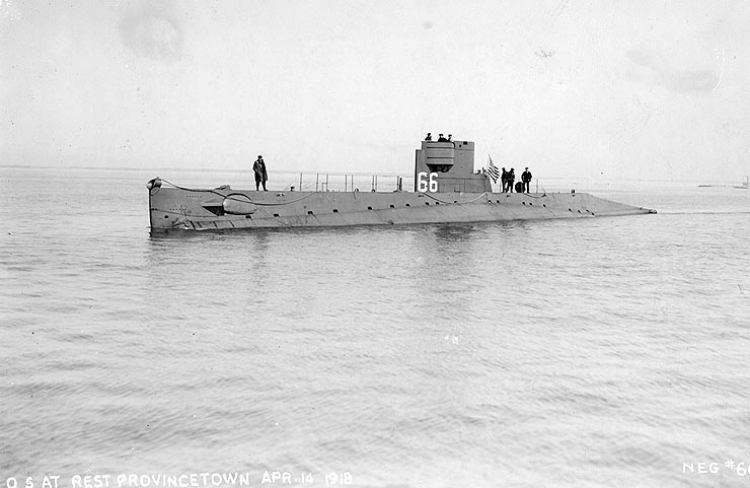
Breault, a torpedoman aboard the O-5, a pre-WWII US submarine, was present during its sinking on October 23, 1923. After the O-5 collided with the USS Abangarez, it went down in under a minute. Breault, working in the torpedo room during the collision, made it topside and had a chance at escape. Instead, he returned to his post to assist another trapped sailor and sealed both inside to avoid the flooding waters. After a 30+-hour rescue operation, the men were freed. Breault was awarded the Congressional Medal of Honor for his actions. It was a rarity in the peacetime Navy, and even more rare for an enlisted submarine sailor. As Walker emphasizes, Breault’s 1923 act embodied the continued Navy motto of “ship, shipmate, self.” While the O-5 incident was a major event in Breault’s life, Walker bookends the sinking with Breault’s early years and continued service to show us that Breault’s life was much more than a single selfless act of service. His was a life built on serving, from his late teenage years in the British Royal Navy through his decades-long U.S. Navy career.
Few would be better suited to tell this story than Ryan Walker, a former U.S. Navy submarine sailor himself. Since leaving service he has become a notable historian, educator, and naval scholar. Walker wrote this book with the passion and care that only a fellow veteran of the “silent service” could. This is seen in the opening pages, where he remembers his time at the modern-day submarine school where he first discovered Breault’s story.
Walker’s work is much more than the result of a small research project that grew it into a micro-historical study with Breault as its center. It is the story of a forgotten hero who found renewed recognition through the love and work of naval historians, many of whom Walker credits throughout his work. Walker gives the reader small reminders of Breault’s act throughout his own service: A small exhibit in a museum, a plaque on a naval pier, a question on a qualification exam. Together, these pieces serve as reminders to modern sailors that at some point they may be asked to do great things. At its heart, that is what The Silent Service’s First Hero is: A reminder of the connection service members feel to those who came before them. A reminder that leadership, service, and courage transcend time.
I highly recommend The Silent Service’s First Hero to anyone who enjoys military and naval history or character studies. Additionally, the micro-historical approach and methods will benefit young historians by providing an example of well-developed and produced period research. In researching and writing such a complete work, Walker has cemented Henry Breault’s legacy for generations to come.
Walker, Ryan C. The Silent Service’s First Hero: The First Submariner to Receive the Medal of Honor. Pen and Sword, 2024.