When Captives Don't Want to Return Home
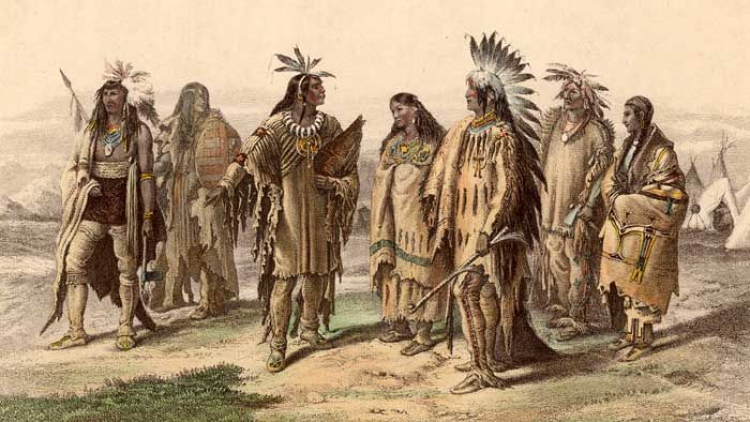
An Unexpected Outcome of the 1764-65 Return of Captives by the Lenape, Seneca, and Shawnee Tribes
The French and Indian War ended with the 1763 Treaty of Paris, with Britain receiving all French and Spanish-claimed territories between the Mississippi River and the British-American Colonies. Afterwards, the British instilled the Proclamation Line of 1763, a boundary along the Appalachian Mountains to prevent Colonists from expanding westward into Native lands. Instead, many Colonists migrated into Native lands, including veterans who were promised frontier land grants for their service before the Proclamation Line was announced. Consequently, Pontiac’s War erupted in 1763, with 14 tribes raiding frontier settlements and sieging forts to assert territorial holdings. Fighting took place in what is now Illinois, Maryland, Michigan, New York, Ohio, Pennsylvania, and Virginia.
During the war, Colonists and Native Americans both committed atrocities, with Native attacks resulting in 500 Colonial deaths, thousands displaced, and abductions. However, the Colonists and British military experienced battlefield victories under Britain’s Colonel Henry Bouquet in the Ohio region and Pennsylvania. These victories led to Lenape, Seneca, and Shawnee (LSS) tribe representatives meeting with Bouquet in October 1764 to request peace. In response, Bouquet told them, “Deliver…all the prisoners captured in your possession, without exception; Englishmen, Frenchmen, women, and children; whether adopted in your tribe, married, living amongst you.”
The Seneca released captives to the British months before, but to ensure peace, in the fall of 1764, Lenape representatives returned 206 captives and in January and May of 1765, the Shawnee returned 53 captives. In turn, the captives reunited with their biological families and Bouquet received accolades from Colonial and British politicians alongside a promotion. Yet this reunion produced an unexpected result that demonstrated a frontier social challenge.
Robert Rogers, who served with the British and Colonists in Pontiac’s War, observed Colonial families were delighted to reunite with their captive family members. However, according to Rogers, many captives were not informed of their handover until immediately beforehand, and upon learning their fate, many “stiffened into living monuments of horror and woe.” Further, some returning captives were tied up by their tribes, so they could not escape, yet an undisclosed number of captives later ran away to likely reunite with their Native families. What was expected to be a joyous event turned into the opposite for many participants.
It was custom for many regional tribes that when a member was killed or captured, if the tribe acquired someone from their adversary’s society, the family of that killed or captured Native could choose to torture and kill, or adopt the acquired captive. If the family chose adoption, often preferred for healthy children or young adults, the Native family was expected to love the captive as much as the family member they lost.
Frontier skirmishes and abductions created widespread Colonial fear and animosity towards all Natives, even those not involved in territorial disputes. This led to a Colonial mob conducting two massacres in Paxton, Pennsylvania in December 1763, resulting in the murder of 20 Conestoga Natives, including women and children not involved in the disputes. Governor John Penn and Benjamin Franklin both called for peace, yet Penn admitted feeling no frontier jury would find a person guilty for killing a Native American, because frontiersmen considered such an act “meritorious.”
Regarding the Native abductions of settlers, there are firsthand accounts from Colonists who were abducted and returned to Colonial society. This includes James Smith, who at 18 years old in 1755 was captured in Pennsylvania by the Mohawks, a Haudenosaunee Confederation member, like the Seneca. Smith underwent a ritual called “the gauntlet,” in which he was forced to run naked through hundreds of Natives who flogged him, threw sand in his eyes after he fell, and continued beating him until he lost consciousness. Afterward, James witnessed bloody scalps of British and Colonists being brought into his camp.
Another account comes from Mary Jemison, who at 15 years old in 1758 was captured in Pennsylvania by a band of Frenchmen and Native Americans, given to the Senecas, and married to a Lenape warrior. While Mary was allowed to live, her parents and three of her siblings were killed and scalped. Mary’s captors openly carried the scalps of her family and she was forced to travel through a Shawnee village, where she saw tied to a pole the burnt heads and appendages of other Colonists. Decades after witnessing this, Jemison stated, the “spectacle [was] so shocking, that, even to this day, my blood almost curdles in my veins when I think of them.” Like Smith, she would continue seeing the remains of Colonists brought in her Native camps.
These traumatic moments impacted both individuals, yet Smith, Jemison, and other Colonists recounted positive Native experiences as well. Their experiences, along with Colonial frontier and local Native societies, must be examined and applied to human psychological needs to understand why many of the Colonial captives desired returning to their adoptive tribes.
The Need to Belong
Dr. Kipling Williams is an American Psychological Association (APA) fellow, the former president of the Midwestern Psychological Association, and has investigated social acceptance behaviors. From his research, Williams states people desire to feel belonging, influence over their community, and self-esteem. These needs may explain why some captives from 1764-65 desired returning to their tribes.
The APA defines “belonging” as “the feeling of being accepted and approved by a group or by society.” It appears the Colonial captives allowed to live were assimilated into their adoptive tribes, probably fostering their sense of belonging. Upon completing the often fatal “gauntlet,” James Smith was anointed into his tribe at a ceremony where their local chief stated, “You are now flesh of our flesh...we are now under the same obligations to love and to defend one another, therefore you are to consider yourself as one of our people.”
Mary Jemison experienced something similar, when the females from her Seneca village gathered in an adoption ceremony, declaring, “In the place of our [lost] brother she [Mary] stands in our tribe. With care we will guard her from trouble; and may she be happy till her spirit shall leave us.” Years later, Mary stated the love she developed for her Native siblings, saying “I loved them as I should have loved my own sister had she lived.”
Many Native tribes created communities that fostered inclusion. The Seneca lived in longhouses, measuring 40 to 400 feet long and 20 feet wide, housing two to 20 families. Longhouses were erected in close proximity within each village. Likewise, the Lenape lived in dome-shaped wigwams, which could house multiple families and were also close together within each village. By ensuring villages and homes accommodated multiple families, tribal members could regularly interact with those within and outside their nuclear family. Meanwhile, frontier homes along the Appalachian Mountains were susceptible to isolation, as frontier land was settled by less than two Colonists per square mile.
A sense of community was fostered moreover by group events like hunting and fishing. When hunting deer in the fall, the Seneca, and likely the Lenape, built two- to three-mile-long fences shaped as a “V,” made of brush and branches, starting far apart but joining at an apex that served as a corral. Then, they started a fire across the wide opening of the fences, while other members walked from the fire towards the corral or outside the fences to guide the deer towards the corral. This kept deer walking and trotting in the direction the Natives wanted, rather than the deer becoming frightened and hurdling the fences. When the deer reached the corral, other members were present, waiting to harvest them. When fishing in the spring, many Senecas established camps near running water. In the water, they erected stone or wooden walls to contain and steer fish so they could be harvested. While frontier Colonists sometimes hunted in groups and fished, it does not appear they conducted expeditions to the recurring extent of the Seneca and Lenape.
Farming likely instilled a further sense of belongingness for the LSS tribes. In each tribal village, women worked together to grow and harvest crops, particularly beans, corn, and squash, while socially engaging each other. In 1772, New York minister David McClure, while traveling with Shawnee members, encountered a woman of Colonial descent, who was a member of the tribe. While the woman did not speak English, McClure observed she seemed content interacting with her peers. Likewise, Mary Jemison mentioned feeling comfortable with Native females while farming and preparing food for consumption. Meanwhile, dispersed frontier Colonial families were likely to grow and harvest crops by themselves.
In 1765, when more Captives were being returned, a Shawnee chief told the British and Colonists, “We have taken as much care of them as if they were our own flesh and blood…we request you will use them tenderly, and kindly, which will induce them to live contentedly with you.” If this view was shared by the captives who lamented their return, they may have felt a greater sense of belonging to their tribe than to Colonial society.
The Need to Feel Influence
According to Dr. Williams, a second psychological need is to feel a possession of influence on one’s community. According to Colonial historian Dale Taylor, Colonial women held no voting nor land ownership rights and Colonial men were required to possess land and Church of England or local church membership to vote. With typically the eldest son inheriting land, Taylor said less than about 5% of Colonists held voting rights, thereby excluding slaves, indentured servants, women, and men without land and church membership. Meanwhile, the LSS tribes claimed boundaries but their members did not own land. For Colonial captives who lamented their return, they may have understood that while their Native families did not own land, neither did anyone else in their tribe, thereby enabling social parity.
Former Colonial men may have felt there were opportunities to exert influence within their tribes. LSS men were selected as chiefs based on their actions. Men could therefore demonstrate their aptitude for a position and if not selected, they could take solace knowing the one selected possessed the needed experience. Further, chiefs were largely respected and expected to interact with their tribal members, offering those with pervasive opinions an opportunity to express concerns and see those concerns addressed. While different from voting, this could offer individuals a chance to exert influence.
Native women held more influence, especially among the Lenape and Seneca, than women on the Colonial frontier. Colonial women largely conceived more children than their Native counterparts, sometimes as many as nine children, whereas Native women often conceived no more than five children. While the chance of death from childbirth or childbirth infections could be as high as 12% for Colonial mothers, Native women experienced less pregnancy-related deaths by conceiving less children. Further, LSS membership was matrilineal-based, meaning when Natives of different tribes married, their offspring was considered descendants of their mother’s tribe. In marriage, the property rights held by the Lenape, and potentially the Seneca and Shawnee, ensured a husband and wife retained their own property during marriage, rather than the husband consolidating everything.
In turn, Native women could hold prominent positions. In an early 1700s journal entry, minister Thomas Chalkley discussed attending a Seneca and Shawnee council and observing a lady serve as a speaker. Chalkley learned the lady was an empress whom the council respected and that other women could serve as council representatives. For the Seneca, women could also be selected as clan mothers, responsible for selecting and providing direction to chiefs, and removing a chief if they felt he was inadequate. For the Lenape, women possessed their own constituency, in which they discussed issues and provided recommendations for tribal decisions. While there were positions and rights withheld from Native women, many possessed higher status and influence in the LSS tribes than in Colonial society. For the captive women returned from 1764-65, this may have provided incentive for them to return to their tribes.
The Need for Self-Esteem
The APA dictionary states self-esteem “reflects a person’s physical self-image, view of their accomplishments and capabilities, and values and perceived success in living up to them, as well as the ways in which others view and respond to that person.” For the captives returned to their biological families, many of them likely experienced a shift in self-esteem based on cultural differences.
Lenape boys and girls and Shawnee boys underwent rites of passage to be considered adults. A Lenape boy was thought to reach manhood after killing his first deer, after which a celebratory ritual took place. A Lenape girl was considered to reach womanhood during her first menstrual period, upon which she would be tended to for 12 days by her mother or another woman. Following, she was not allowed to be seen by the tribe for two months. Meanwhile, according to historian Peter Cozzen’s book, Tecumseh and the Prophet, a Shawnee boy was considered to reach manhood after completing a vision quest. This could consist of fasting, consuming upsetting medicine, drinking intoxicating concoctions, and/or enduring extreme temperatures while in isolation. Following, the boy was said to receive spiritual visions revealing his future tribal role, whether it be a warrior, prophet, or doctor.
These rites of passage held varying degrees of danger, but may have instilled personal pride, comradery, and respect from the tribe. Following, returning captives who completed such trials may have felt a threat to their self-esteem when entering a society that did not recognize these actions or viewed them with apprehension.
Cultural male appearances provided a stark difference between the LSS tribes and frontier Colonists. In his journal from 1765, Robert Rogers wrote many Native males donned plucked bald heads, except for a small patch of hair, wore face and body paint, nose rings, and earrings that stretched their earlobes just below the base of the skull. This was a sharp contrast to Colonial frontiersmen, who wore buckskin breeches, hunting shirts, and jackets, but sported none of the above Native fashions. As such, many frontier Colonists probably felt apprehensive seeing the piercing marks and regrowth of plucked hair on returned male captives.
James Smith mentioned that when he returned to his biological family, they were delighted to receive him, but “were surprized [sic] to see me so much like an Indian, both in my gait [walking] and gesture.” While families and friends appeared elated to reunite with returned captives, the captives’ alteration of appearance and gesture likely concerned other Colonists.
While living with the Senecas and Lenape, Mary Jemison stated, “no people can live more happy than the Indians,” and the only memory, albeit severe, weighing on her happiness was seeing her biological family killed. Mary further said, “If I had been taken in infancy, I should have been contented in my [tribal] situation.”
If the satisfaction she felt for Native life was shared by returned captives, especially those who did not remember their capture, those captives probably preferred returning to the tribal life they enjoyed. After the American Revolution, Mary was offered the opportunity to return to her biological family but she refused, saying, “I had got a large family of Indian children that I must take with me; and…if I should be so fortunate as to find my relatives, they would despise them, if not myself, and treat us as enemies, or at least, with a degree of cold indifference.” Mary’s opinion of how she would be treated by Colonial frontier society was likely shared by many of the returned captives.
While Native tribes often tortured and killed captives, they could also adopt and love captives as their own family. In turn, the Colonial captives who opposed returning to frontier society probably felt more attachment to their tribes due to the latter instilling a stronger sense of belonging, influence, and/or self-esteem.