Reflecting on the Rhineland Crisis
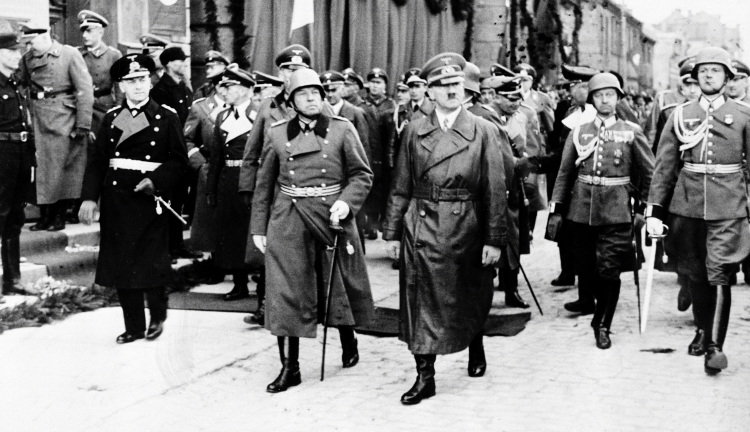
Ninety years ago this month, German troops marched into the demilitarized Rhineland area in violation of the Versailles Treaty of 1919.
Some historians and international relations experts, like Henry Kissinger, contend that the Rhineland Crisis of March 1936 was a turning point in history. Had Britain and France reacted forcefully against the entry of German troops into the demilitarized Rhineland, history might have evolved differently. Nazi Germany may have been deterred from further aggressive moves.
After all, it was none other than Adolf Hitler, Germany’s leader, who assuaged those generals who were worried about the consequences of his decision, that Britain and France would not react militarily. He turned out to be right.
Indeed, prior to the invasion of Austria and its subsequent incorporation into the German Reich in March 1938, Hitler assured his wary generals that Britain and France would not react forcefully. Once again, he turned out to be right.
A forceful response in March 1936 might have averted the subsequent crises, so the argument runs.
To be sure, a year before the Rhineland Crisis, in March 1935, Germany announced that it would reintroduce military conscription, following the establishment of its air force. Both moves were in flagrant contravention of the Versailles Treaty.
Britain, France, and Italy formed the Stressa Front in April 1935 to express their unequivocal opposition. Indeed, they agreed that any further step undertaken unilaterally by Nazi Germany in violation of the Versailles Treaty, such as the sending of German troops to the demilitarized Rhineland, would be met by a resolute reaction.
That was not to happen. When German troops marched into the demilitarized Rhineland, Britain and France criticized Germany, but did not contemplate any military reaction. Italy, which by now had become estranged from Britain and France following its invasion of Ethiopia in October 1935, began a rapprochement with Nazi Germany.
Of course, had there been a resolute reaction by Britain and France in 1936, perhaps future historians might have criticized the British and French “overreaction” against a non-violent move, which, by itself, could hardly be seen as constituting a danger to international stability. After all, German troops were marching into German territory. Did that justify a forceful reaction?
British reaction was to be lenient so long as Germany was violating the Versailles Treaty to amend what was perceived in Britain as its injustices.
French reactions depended on British reactions. France had decided to play a secondary role to Britain. That was particularly visible from 1937 onwards.
Further, French public opinion was divided between those who perceived Nazi Germany as the greater danger and those who perceived Communism as an even greater danger. That, in a sense, paralyzed French foreign policy.
There was a dilemma for both Britain and France: to wait and see if Nazi Germany was a dissatisfied power, which would accept international norms once its limited demands were met, or if it would turn out to be a revolutionary power bent on destroying the international order.
Many in Britain and France warned from the very beginning that Nazi Germany would not confine itself to amending the wrongs of the Versailles Treaty. For example, Britain’s Ambassador to Germany when Hitler came to power, Sir Horace Rumbold, warned the Foreign Office in London in April 1933 that Hitler meant to translate what he wrote in Mein Kampf into action.
Britain conducted a passive policy of appeasement from 1933 to 1937, accepting as a fait accompli German unilateral moves. From 1937, under the leadership of Neville Chamberlain, Britain pursued an active policy of appeasement, attempting to appease Germany in the belief that the conflict with Germany could be settled, and that German demands were limited in nature.
With the benefit of hindsight, a forceful British and French reaction in 1936 seems to be reasonable, and indeed imperative. For the decision-makers in London and Paris back then, there was an alternative: to express criticism without military action.
The turning point was not March 1936, but March 1939. When German troops marched into Prague in March 1939 in violation of the Munich Agreement of September 1938, it became clear even to the most ardent supporter of appeasement that Nazi Germany did not intend to amend the Versailles Treaty, but to destroy the European order.
The argument adduced by those who supported the policy of appeasement that Germany was merely trying to implement the principle of national self-determination when it sent its troops to the Rhineland in March 1936, when it annexed Austria in March 1938, and when it forced Britain and France to accept the incorporation of the Sudetenland into Germany in September 1938, crumbled when Germany occupied what was left of Czechoslovakia in March 1939. After all, there were no Germans living there.
In March 1936, it was possible to argue in favour of appeasement; in March 1939, it was not.