The 1%ers: Postwar Motorcycle Clubs Were Built by Veterans, Not Criminals
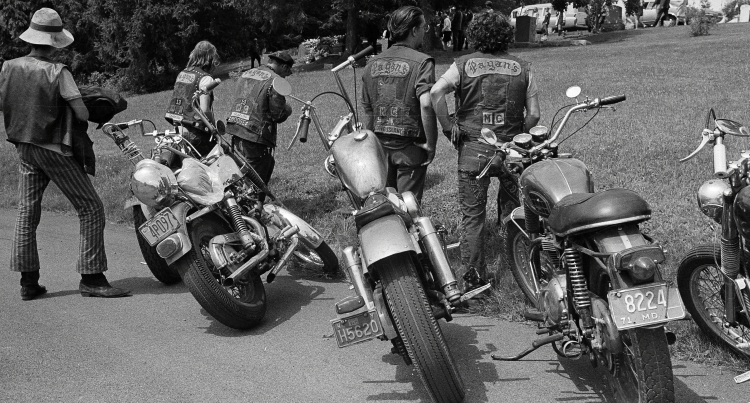
Postwar motorcycle clubs weren’t born from crime. They were built by veterans trying to recreate a world they had just left behind.
The men who formed the first motorcycle clubs after World War II were not organized criminals. They were infantrymen, tankers, scouts, MPs, mechanics, and couriers returning from the most mechanized, high‑adrenaline war in human history. They came home to a country that expected them to settle quickly into stable, domestic lives – but many found the pace and structure of civilian life no longer matched who they had become. Returning veterans often described restlessness, sleeplessness, and a need to remain in motion, along with a desire to maintain the close, all‑male bonds that had defined their wartime experience. Motorcycles offered a bridge between those two worlds.
The machines themselves were familiar. Thousands of American servicemen had ridden the Harley‑Davidson WLA in Europe and the Pacific, using it for courier work, reconnaissance, and military policing. The experience exposed them to long hours, harsh conditions, and a style of riding that emphasized control, speed, and endurance. When they returned home, Harley‑Davidson marketed directly to this population, and postwar sales surged as veterans sought to recreate some version of that experience. The motorcycle was not just a vehicle – it was continuity.
The clubs these men formed were not organized criminal organizations. Contemporary newspaper accounts from the late 1940s and early 1950s describe them as “rowdy veterans” and “boisterous but largely harmless” riding groups. The most famous early episode, the 1947 Hollister rally, was later mythologized into a “riot,” but the reality was closer to a loud, alcohol‑fueled gathering that grew beyond the town’s capacity to manage.
National media coverage amplified the event, and a widely circulated photograph helped fix the image of the dangerous outlaw biker in the public imagination. The American Motorcyclist Association’s claim that 99% of riders were law‑abiding was less a formal judgment than an attempt to reassure the public. Riders themselves responded with the “1%” patch, originally as a tongue‑in‑cheek rejection of the expectations placed on them.
The deeper explanation for these clubs is psychological rather than criminal. Postwar research and contemporary accounts consistently describe the difficulty many veterans faced when reintegrating into civilian society. They often gravitated toward other veterans, maintaining shared routines, stories, and social connections rooted in their service.
Firsthand accounts from early motorcycle club members reflect the same pattern. These men were not searching for criminal opportunity; they were searching for intensity, belonging, and a familiar structure of loyalty and identity. In this sense, early motorcycle clubs functioned as informal continuations of wartime units – self‑organized, tightly bonded, and governed by internal codes.
The transformation of some motorcycle clubs into organized criminal enterprises came later and developed over time. Research tracing outlaw motorcycle groups shows how certain clubs evolved in the decades after the war, particularly as younger, non‑veteran members entered and reshaped the culture. What emerged by the 1960s and beyond was not a direct extension of the original veteran groups, but something more complex and, in some cases, more overtly criminal. The distinction matters. The men who returned from Anzio, Bastogne, Okinawa, and the Bulge did not set out to build criminal organizations. They built communities.
Seen in that light, postwar motorcycle clubs were less a rejection of American society than a response to it. They offered a way for men who had lived within a system defined by danger, discipline, and brotherhood to maintain a version of that world on their own terms. The motorcycles provided movement. The clubs provided structure. Together, they created a space where the transition from war to peace could be managed – not by institutions, but by the veterans themselves.