The Founders Were Not Visionaries. That Was Their Genius.
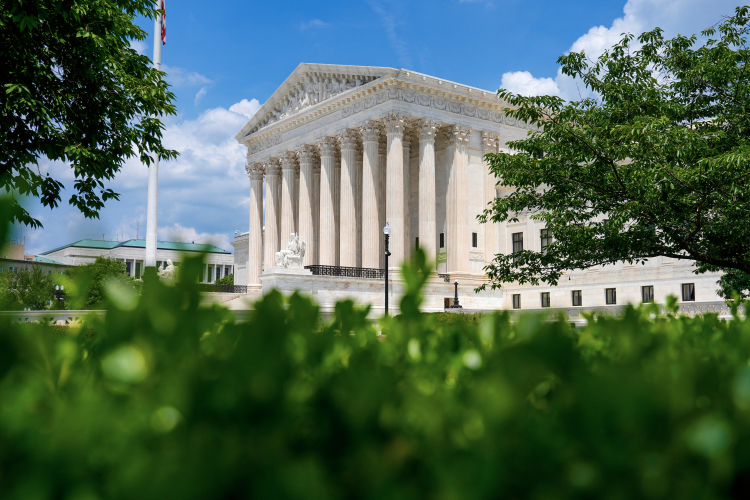
They could not imagine smartphones, retirement plans, digital estates, autonomous ships, or algorithmic hiring. But they built a constitutional framework flexible enough to meet them.
The conventional way to mark a 250th birthday is to call the Founders “visionaries,” to say they saw around corners and anticipated the country we became. These authors would push back on that, gently. The founders were brilliant, but they were not prophets. They wrote with quill pens by candlelight and traveled by horse. They could not have anticipated most of what their country would become.
And they didn't have to.
Two and a half centuries later, we're still reaching back to the documents they left behind to answer questions they never thought to ask. That isn't a failure of their imagination – it may be their greatest achievement. The Founders didn't try to write a rulebook for a future they couldn't predict. They built a framework instead, trusting the people who came after them to do the rest.
We are six practicing attorneys who spend our days in very different corners of the law. We each asked the same question: what does our own practice deal with that the Founders never could have foreseen, and how has their framework reached it anyway? We arrived at the same answer from six directions.
Jessica Wright, Appellate Practice
It is remarkable how much we ask of a document written in the age of horse-drawn carriages. The Founders did not anticipate cell phones or social media, but the Constitution governs them all the same. That happens through appellate courts and the advocates who argue before them, guided by competing philosophies of interpretation, originalism on one side and the living Constitution on the other. Sometimes I wish the Founders had left us an answer key. They didn't. They left a framework, and it still works because the courts keep interpreting it and advocates keep testing its edges. How does the Fourth Amendment apply to the search of a smartphone? How does the First Amendment reach a dispute that began in a comment section? Every generation inherits questions that didn't exist before, and the beauty of appellate work is the creativity it takes to answer them.
Justin Guthrie, Admiralty & Maritime Law
The Founders gave the new judiciary power to hear cases of admiralty and maritime law, which in the era of wooden tall ships meant trade and war on the open water. They built a system flexible enough to absorb the maritime principles inherited from England, yet open enough to grow its own body of law through precedent. They could never have anticipated that those courts would one day hear cases involving jet-skis, submersibles, container ships, oil rigs, and very soon autonomous vessels. But that is exactly where they deserve credit. Whether by luck, wisdom, or both, they anticipated that the judiciary would need to evolve beyond their comprehension, and through Article III, they made sure it could.
Gracie S. Saas, Trusts & Estates
At the founding, families and assets were simple. The farm went to the eldest son. Today there are blended families, cryptocurrency and timeshares, and clients who live across several states and even countries. Digital assets alone would have baffled the founding generation. Who has the authority to access your email, your cloud storage, or your intellectual property after you're gone? Divorce and remarriage have reshaped inheritance away from the tidy family tree, and global wealth has reached a scale the Founders never envisioned. And yet the basic project, deciding who gets what and how to honor a person's wishes after death, is one they would recognize completely. The questions have changed beyond measure. The instinct behind them has not.
Matthew Repella, Corporate Law
The Founders never wrote a right to privacy into the Constitution, but they clearly valued it as part of liberty and freedom from arbitrary government power. The general warrants the Fourth Amendment answered, the quartering of troops the Third Amendment prohibited, the intrusion into homes and papers that animated the Bill of Rights, all of it meant to carve out a sphere of personal security where government power would be sharply limited. Over 250 years, that principle has traveled somewhere they never anticipated: the corporation. Modern corporate governance now turns heavily on how companies collect, use, and protect personal information, and shareholders, customers, and regulators increasingly treat privacy as a measure of corporate responsibility. A principle born as a shield against government overreach now shapes fiduciary duty and compliance across the business world. The Founders drew the line to protect citizens from the state. Today, that same line runs straight through the boardroom.
Rebecca Sczepanski, ERISA & Employee Benefits
"Retirement? What's that?" Americans at the founding might well have said exactly that. Retirement plans, health benefits, and executive compensation did not exist, and neither did the large employers that now provide them. Since then, life expectancy has roughly doubled, and medicine has advanced in ways that save lives and carry staggering costs. ERISA, the Employee Retirement Income Security Act of 1974, was enacted to bring national order to employee benefit plans, roughly a decade after the collapse of the Studebaker-Packard pension left workers with promises that couldn't be paid. Health and welfare plans were almost an afterthought in 1974, yet they have grown to eclipse retirement benefits in cost and complexity. In 250 years, employee benefits have gone from nonexistent to essential, work the Founders never imagined, carried out within a constitutional framework that somehow still holds it.
Wade Herring, Labor & Employment Law
The Declaration of Independence promised that all men are created equal, endowed with unalienable rights including life, liberty, and the pursuit of happiness. It was a remarkable statement and an incomplete one. At the time, the labor that built much of the new nation was performed by enslaved people, indentured servants, and women whose work and contracts were largely controlled by their husbands. The promise of equality the Founders wrote down would have to be made real over the next two and a half centuries, in ways they never imagined. Title VII of the Civil Rights Act of 1964 made equal opportunity in employment the law of the land, prohibiting discrimination based on race, color, national origin, religion, and sex. Congress later added age, disability, and pregnancy, and the Supreme Court has since extended those protections to sexual orientation and gender identity. Each expansion answered a question the Founders never thought to ask. America, it turns out, had promises to keep, and we are still working to keep them.
• • •
Six practice areas. Six corners of American law that barely existed, or didn't exist at all, when the Constitution was ratified. And yet the same framework reaches every one of them. The Founders couldn't have written a document detailed enough to govern the world we live in now, and they were wise enough not to try. What they left instead was an architecture sturdy enough to carry questions they never thought to ask, and durable enough to hold the next 250 years of them, too.
That was always the point.