The American Dream on the Danube
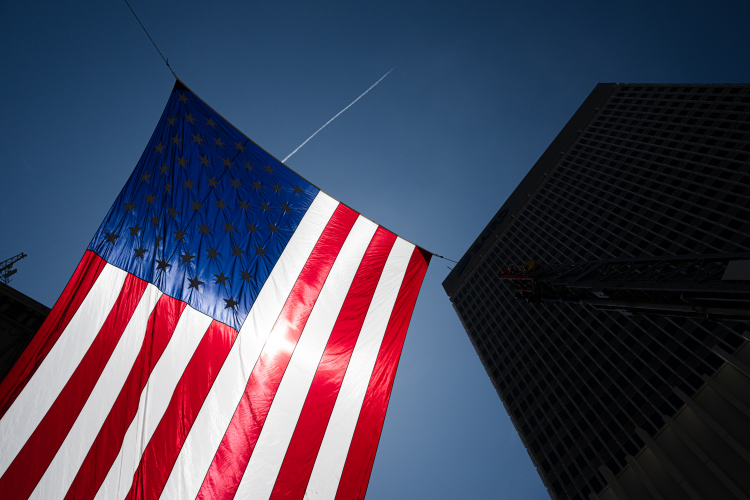
As Washington continues to argue over whether the American founding should be celebrated or deconstructed, and while most parts of Europe consider anti-Americanism fashionable, one of the most compelling tributes to the American experiment has opened – not on the banks of the Potomac but on the Danube.
The Hungarian National Museum’s new exhibition, American Dream: Hungarians in the United States, 1776–2026, is a masterclass in how to tell America’s story with both historical honesty and patriotic confidence.
Created to commemorate the 250th anniversary of American independence, the exhibition traces the Hungarian-American story from the Revolutionary War to the great immigrant waves and the generations of Hungarian Americans who transformed American science, industry, culture, and public life. Hungarians who crossed the Atlantic for a better future, in search of the American Dream.
Visitors encounter an exhilaratingly eclectic collection of artifacts: a beautifully restored 100-year-old Ford Model T made possible by the engineering genius of József Galamb and Jenő Farkas; an Iroquois moccasin presented to the “George Washington of Hungary,” Lajos Kossuth during his triumphant American tour; one of Zsa Zsa Gabor’s iconic white cocktail dresses; Tony Curtis’s personalized Hollywood director’s chair; early Mickey Mouse figures collected by Hungarian toy designer Mariska Undi, celebrating the contribution of Disney animator Ferdinánd Huszti Horváth; a model of the Apollo Lunar Roving Vehicle, built under the leadership of Hungarian-born engineer Ferenc Pavlics; and even a humble wooden relief crate sent by American schoolchildren to Hungary during the 1956 Revolution, its lid still bearing the handwritten signatures of the children who filled it with food for families they had never met.
Rather than dwelling on grievance, the exhibition asks the fundamental question: What is the American Dream? What does it mean to be free? And what sacrifices are required to preserve that freedom? The answers are raw, diverse, honest but inspiring.
Among the exhibition’s most moving pieces is a portrait of Colonel Michael Kováts by Hungarian-American artist Sándor Bodó, displayed alongside Bodó’s remarkable commemorative medal series honoring the foreign-born patriots of the American Revolution: Lauzun, de Grasse, Kościuszko, Rochambeau, von Steuben, Lafayette, Kovats and Pułaski. His artistic message is unmistakable: E Pluribus Unum was never merely a motto – it was the lived reality of America’s founding.
Bodó understood that truth because he lived it. Imprisoned by Hungary’s communist regime after secretly embedding an anti-communist message into the design of a government banknote, he was freed during the 1956 Hungarian Revolution. When Soviet forces crushed the uprising, he escaped across the Andau Bridge with his wife and young son before eventually finding refuge in the United States. America gave him freedom; he spent the rest of his life honoring America. He lived the American Dream and celebrated it through his art.
The exhibition is also a noteworthy example of American public diplomacy at its best. The U.S. Embassy in Budapest partnered with the Hungarian National Museum to help bring this ambitious project to life, demonstrating that the most effective diplomacy is often cultural: strengthening alliances by celebrating shared achievements, common ideals, and the remarkable human stories that bind nations together.
The museum’s curators resisted the temptation to reduce history to ideology. Instead, they produced an exhibition that is scholarly without being cynical, patriotic without being triumphalist, and inspiring without sacrificing historical nuance.
There is an important lesson here. Sometimes it takes friends abroad to remind Americans of the extraordinary ideals upon which their nation was founded. Looking at America from Budapest, one sees not a flawless nation, but an exceptional one – one whose promise inspired millions to cross oceans, overthrow tyranny, invent the future, and begin new lives in freedom.
As the United States celebrates its 250th birthday, it was heartening to find such a compelling defense of the American experiment. It is a quiet reminder that America's story has never been America's alone. It has inspired – and been shaped by – people far beyond its shores.