President Benjamin Harrison Deserves Better Than Oblivion
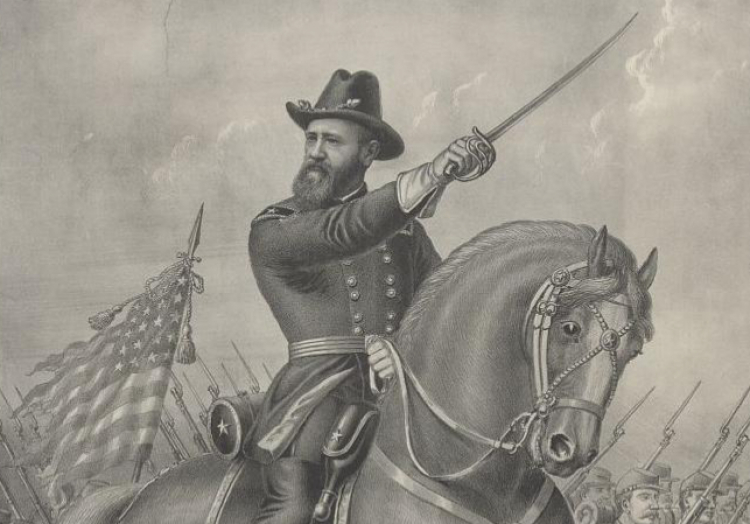
August 20 marked the 193rd birthday of an American president.
Don’t feel bad if you didn’t know that. Benjamin Harrison is used to being forgotten.
Harrison is almost comically overlooked. Ask someone to name the presidents between Lincoln and Teddy Roosevelt, and you would probably hear crickets.
It’s even worse for a guy like Harrison, whose lone presidential term is sandwiched between Grover Cleveland’s two nonconsecutive terms. Even his grandfather, William Henry Harrison, is better remembered, and the man was president for just 31 days.
But being forgotten isn’t the same as being insignificant. Harrison may never top anyone’s list of great or memorable presidents. His face isn’t carved into a mountain in the Black Hills of South Dakota, and no one is clamoring for a Benjamin Harrison national holiday. But during his four years in the White House, Harrison presided over a surprisingly consequential chapter in our nation’s history.
The nation expanded rapidly during Harrison’s tenure, with six states joining the Union, including North Dakota, South Dakota, Montana, Washington, Idaho and Wyoming. No president since has admitted more states.
Congress passed the Sherman Antitrust Act, the nation’s first federal law aimed at curbing the power of monopolies. Harrison also signed legislation that established the foundation for America’s national forest system, eventually setting aside more than 13 million acres of public land. And at a time when the United States was beginning to emerge as a world power, his administration helped build a modern American Navy.
Yet perhaps the most remarkable part of Harrison’s presidency is one that has been almost entirely forgotten: his fight to protect Black Americans' voting rights.
Harrison took office in 1889, just a little more than a decade after Reconstruction ended. Across the former Confederate states, Black Americans faced efforts to keep them from the ballot box through intimidation and violence. Harrison believed the federal government had a role in protecting their right to vote.
He supported what became known as the Lodge Bill, which would have allowed greater federal oversight of congressional elections and provided a way to challenge election abuses. The legislation passed the House of Representatives but ultimately died in the Senate.
Harrison, though, did not move on quietly. In his 1891 annual message to Congress, he warned that Black Americans were being deprived of the political rights guaranteed to them after the Civil War.
Harrison’s warning fell on deaf ears. Within a matter of years, Jim Crow laws would become even more deeply entrenched across the South, while Washington largely abandoned the fight for the protection of voting rights.
Harrison didn’t stop disenfranchisement, but he tried. That alone makes his presidency harder to dismiss as four forgettable years wedged between two Cleveland administrations.
None of this is to suggest Harrison’s presidency was an unqualified success. Far from it.
The McKinley Tariff, which Harrison signed in 1890, raised import duties and quickly became politically unpopular. Federal spending also surged. For the first time in American history, Congress appropriated more than $1 billion, earning it the nickname the “Billion-Dollar Congress.” Voters weren’t particularly impressed.
Republicans were clobbered in the 1890 midterm elections, losing control of the House in one of the worst congressional defeats in the party’s history. Two years later, Harrison lost his rematch with Cleveland.
So no, Benjamin Harrison was not another Washington, Jefferson or Lincoln. But perhaps Harrison’s real problem isn’t that he accomplished too little. It’s that he governed during an era Americans have largely forgotten.
Our popular telling of American history tends to jump from the Civil War and Lincoln’s assassination to Teddy Roosevelt charging into the 20th century.
The decades in between can feel like a historical waiting room, populated by a collection of bearded presidents whose names Americans vaguely remember from history class, if they remember them at all. Names like Rutherford B. Hayes, James Garfield, Chester Arthur, Grover Cleveland, and Benjamin Harrison.
Yet during those years, America was hardly standing still. The country Harrison inherited was being transformed by industrialization and the explosive growth of cities.
Railroads stretched across the country, connecting the Atlantic to the Pacific. Enormous corporations accumulated unprecedented economic power. The United States was beginning to look beyond its shores and emerge as a global power.
Many of the political fights we associate with the 20th century, from corporate power to conservation to civil rights, were already taking shape.
Harrison happened to be sitting in the White House while much of that transformation was underway. That doesn’t make him one of America’s greatest presidents, but it does make him considerably more than a presidential footnote.
Benjamin Harrison won’t be getting a monument anytime soon. And historians don’t need to suddenly rank him alongside Washington and Lincoln.
But 193 years after his birth, perhaps he deserves something simpler: to be remembered.